

White house shooting On November 26, 2025, a shocking shooting unfolded just blocks from the White House in Washington, D.C. — leaving two members of the West Virginia National Guard critically wounded, and putting the spotlight on U.S. migration policy, security, and national-guard deployment. Here’s a detailed, reader-friendly yet SEO-optimized breakdown of the incident and its aftermath.
🔫 What Happened: The Shooting Near the White House shooting
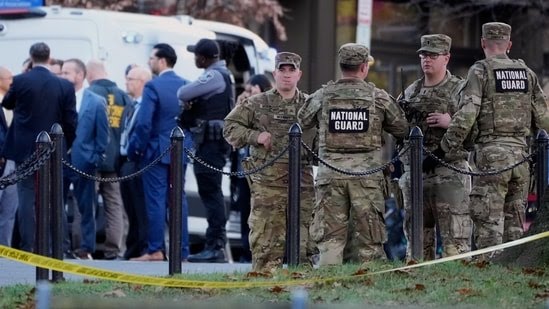
- The attack occurred around 2:15 p.m. ET, near 17th & I Streets NW — roughly two blocks northwest of the White House, close to the Farragut West station.
- According to law-enforcement officials, a lone gunman approached the patrolling National Guard members, “came around the corner,” raised a handgun, and opened fire in what was described as an ambush-style “targeted white house shooting.”
- The two guards — both from West Virginia — were critically injured and rushed to local hospitals.
- The suspect, also wounded during the exchange of gunfire, was subdued on the spot by other Guard troops and taken into custody.
As of now, the motive remains unclear. Authorities say they have no definitive information linking the suspect to a broader conspiracy or group.
👤 The Suspect: Who Is He?
- The alleged shooter has been identified as Rahmanullah Lakanwal, a 29-year-old Afghan national.
- He reportedly entered the U.S. in September 2021 under Operation Allies Welcome (OAW), an initiative launched during the U.S. withdrawal from Afghanistan to resettle eligible Afghans.
- OAW parolees were given temporary permission to stay, but — as of 2025 — they remain a small fraction of the U.S. immigrant population.
- Details about Lakanwal’s background, motivations, and possible affiliations are still under investigation. Officials say the suspect is not cooperating with investigators.
🇺🇸 Immediate Aftermath: Government Reaction & Security Response
- The white house shooting triggered a swift response: other Guard members at the scene subdued the suspect after gunfire.
- The deployment of the Guard to D.C. — part of a broader federal “crime-emergency” mobilization ordered in August 2025 — has become more controversial overnight.
- In response to the attack, the U.S. U.S. Citizenship and Immigration Services (USCIS) announced an indefinite halt to the processing of immigration applications from Afghan nationals, pending a review of vetting procedures.
- Meanwhile, the government is reportedly sending 500 additional National Guard troops to Washington.
🗣 Political Fallout & What Leaders Are Saying
- Donald Trump — U.S. President at the time of shooting — called the attack an “act of evil, hatred and terror.” He said the administration would “re-examine” every Afghan who entered under OAW.
- Trump also labeled lax migration and refugee policies the “single greatest national security threat” faced by the U.S.
- Local officials, including Muriel Bowser — Mayor of Washington, D.C. — described the shooting as a “targeted white house shooting attack.”
- The uncertainty around motive and the background of the suspect has sparked heated debate: critics warn against stigmatizing entire refugee or immigrant groups, while supporters of stricter immigration policy see this as validation of their concerns.
📅 Bigger Picture: Why This Matters
- The incident is the most serious violence against National Guard members deployed in Washington since the expanded federal deployments began earlier this year.
- It intensifies scrutiny of both domestic-military deployments and the vetting — or re-vetting — of refugees admitted under humanitarian parole programs like OAW.
- The decision by USCIS to pause Afghan immigration requests suggests a major shift in U.S. immigration policy could be underway, driven by security concerns.
- The shooting highlights the delicate balance between national security and humanitarian commitments — a debate sure to shape U.S. immigration and refugee policy for months to come.
✅ What to Watch Next: Key Developments
- Investigation results: Whether authorities find any motive or links to terror networks.
- Outcomes of the USCIS review: Will Afghan asylum/parole requests resume? Under what conditions or restrictions?
- Public and political response: Will this incident reshape broader immigration debates in Washington and beyond?
- Guard deployment and public safety: How will increased Guard presence in D.C. affect security, civil liberties, and local politics?
This is a developing story — more details are expected in the coming days as investigations proceed. I’ll continue to monitor for major updates and can provide deeper analyses (for example on immigration policy or national-security implications) if you like.